Product design / UX and UI / Compliance
Every buyer checked.
No sale held up.
I designed identity and AML verification across Ammoze and Ammoze Agent, so every buyer and seller in a sale could be checked when Australian real estate agencies became AML reporting entities on 1 July 2026.
A check for every person.
A sale that keeps moving.
- Role
- Sole product designer
Ammoze and Ammoze Agent - Team
- Compliance, product, engineering
and FrankieOne - Scope
- Verification flow, AML questions,
agent tools and payout gates - Platform
- Mobile apps
and web verification link - Timeline
- 2026 to present
Live since July 2026 - Result
- 98%
completed verification
Context
Real estate joins the AML regime
On 1 July 2026, Australia’s Tranche 2 reforms brought real estate agencies under the Anti-Money Laundering and Counter-Terrorism Financing Act. Agencies now have to know who they are dealing with: verify identities, understand where the money comes from and report suspicious matters to AUSTRAC.
Ammoze began as the payment platform behind Coposit, an off-the-plan marketplace, and is now extending into established property. It holds sales deposits in its own trust account, runs AML/CTF checks on every buyer and seller, and pays everyone out at settlement. Under an outsourcing agreement, Ammoze carries the AML workload while the agency keeps the decisions only a reporting entity can make.
That moved verification from a supporting feature to the centre of the product. Every sale now depends on checks that are thorough enough for the regulator and quick enough not to delay anything.
Invite the seller.
The seller signs up in the Ammoze app and verifies their identity.
Create the sale.
Buyers verify, and AML checks run on everyone involved.
Take the deposit.
The buyer pays into Ammoze’s trust account.
Release the payout.
The seller confirms and an admin approves. Any open check holds the payout here.
Stage diagram, not product screens.
The challenge
Ask a lot, without treating people as suspects
The checks themselves are not negotiable. For each person, compliance needs residency and citizenship, occupation, address, foreign tax residency, any other names, where the funds and their wealth come from, the purpose of the purchase, consent and a verified ID.
The people answering are in the middle of one of the biggest purchases of their lives, usually on a phone and often between inspections and calls with their agent. Some are not buyers or sellers in the usual sense: a director behind a company, or a participant in a trust, who may never have heard of Ammoze.
Agents had a different problem. They are responsible for the sale, but they are not compliance officers and should not become data-entry clerks. They needed to start the checks, see where each one stood and know what was holding up a payout, without handling sensitive details themselves.
My challenge was to design one system with three views of the same check: the person being verified, the agent running the sale, and Ammoze’s compliance team working behind both.
| Who | Where | What they do | What they see |
|---|---|---|---|
| Buyer or seller | Ammoze app or a web link | Answers questions and scans their ID once | “All done!”, whatever the result |
| Agent | Ammoze Agent app | Starts each check with a mobile number | ID and AML status for each person, the AML report and anything holding up payout |
| Ammoze compliance | Behind the scenes | Runs FrankieOne checks and reviews anything that doesn’t pass automatically | Everything |
The agency keeps the final say on suspicious matter reports and enhanced due diligence.
My contribution
My role across both apps
I was the sole product designer across Ammoze, the app buyers and sellers use, and Ammoze Agent, the app agents and agency staff use. I designed the verification flow end to end, the agent tools for starting and tracking checks, and the states that hold a payout when something is outstanding.
I worked closely with Ammoze’s compliance team on what had to be collected and why, with FrankieOne on what their platform and DAON’s biometric flow could and couldn’t do, and with product and engineering through delivery.
The new flow went live at the beginning of July 2026, in step with Tranche 2.
Verification flow
Our questions first, the scan last
Choosing a faster check
Ammoze had verified IDs with RapidID and later ConnectID. For AML we moved to FrankieOne, which checks both individuals and entities and has DAON’s biometric scan built in. Scanning a face and an ID document is quicker than typing in document numbers, and speed matters when someone is trying to secure a property.
Order the flow by what we control
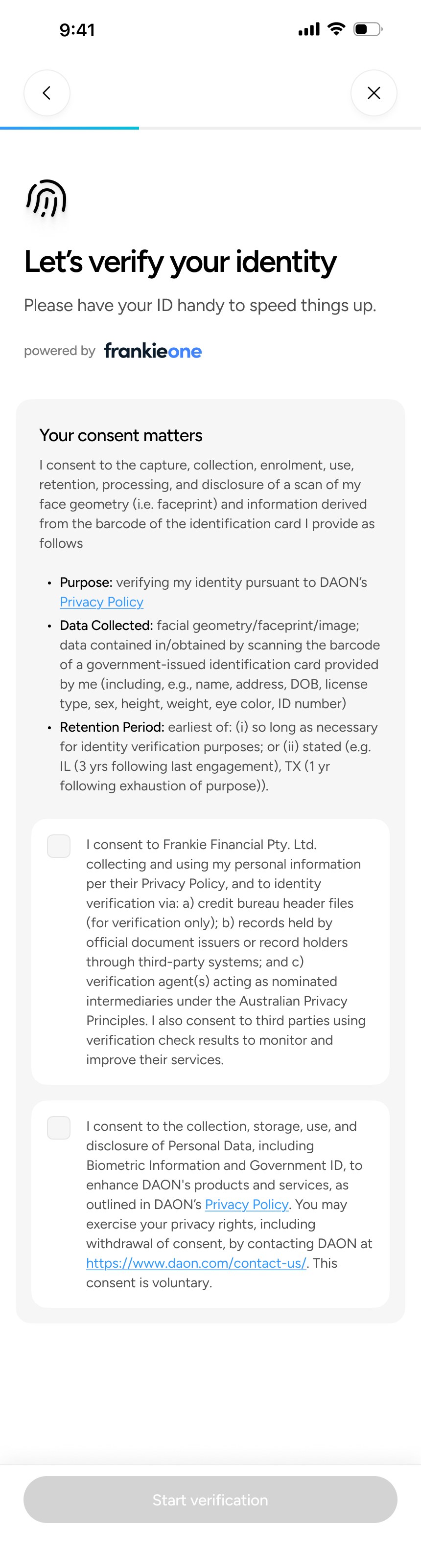
The order of the flow was a deliberate decision. Our own questions come first because we control them: answers save as people go, so anyone can stop and pick up where they left off. The DAON scan runs in its own flow, which we can’t control, so it comes last.
That order also protects the outcome. If the scan fails, compliance already has what it needs to assess the person’s circumstances, rather than a half-finished record.

About you.
Gender, residency, citizenships, occupation, address, foreign tax residency and other names.
The money.
Source of funds, source of wealth and the purpose of the purchase.
Consent.
Plain-language consent for FrankieOne’s checks and DAON’s biometric scan.
ID scan.
DAON’s own flow: a face scan and a driver’s licence or passport.
One flow, two ways in
The same flow runs in the app and as a web link. Buyers and sellers use the app they already have. Directors, trust participants and others behind a company structure verify from a link, without downloading anything.
Question design
One question at a time, and a reason when it’s personal
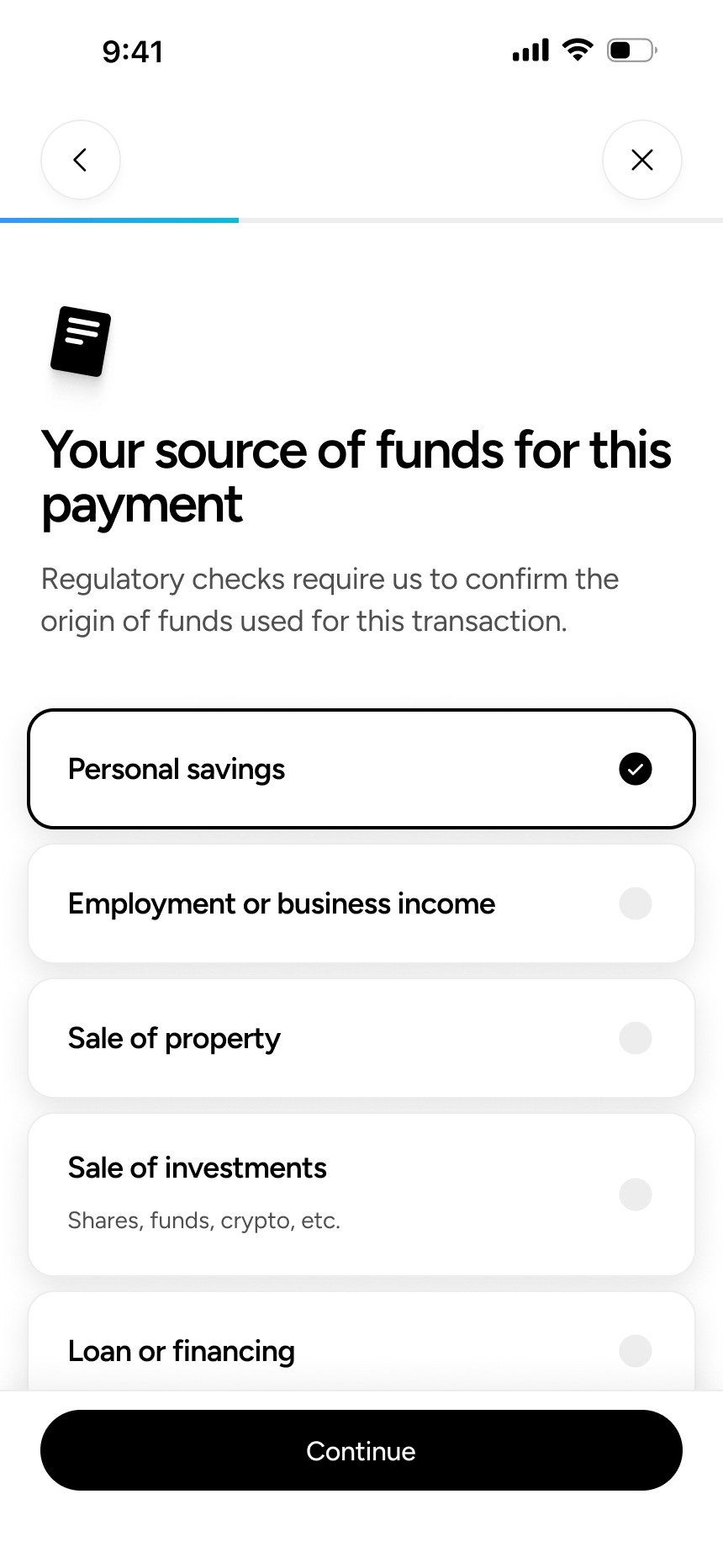
Each screen asks one thing, with progress at the top and answers saved as people go. Where a question could feel intrusive, a single plain line explains why it’s asked. On source of funds, that line reads: “Regulatory checks require us to confirm the origin of funds used for this transaction.”
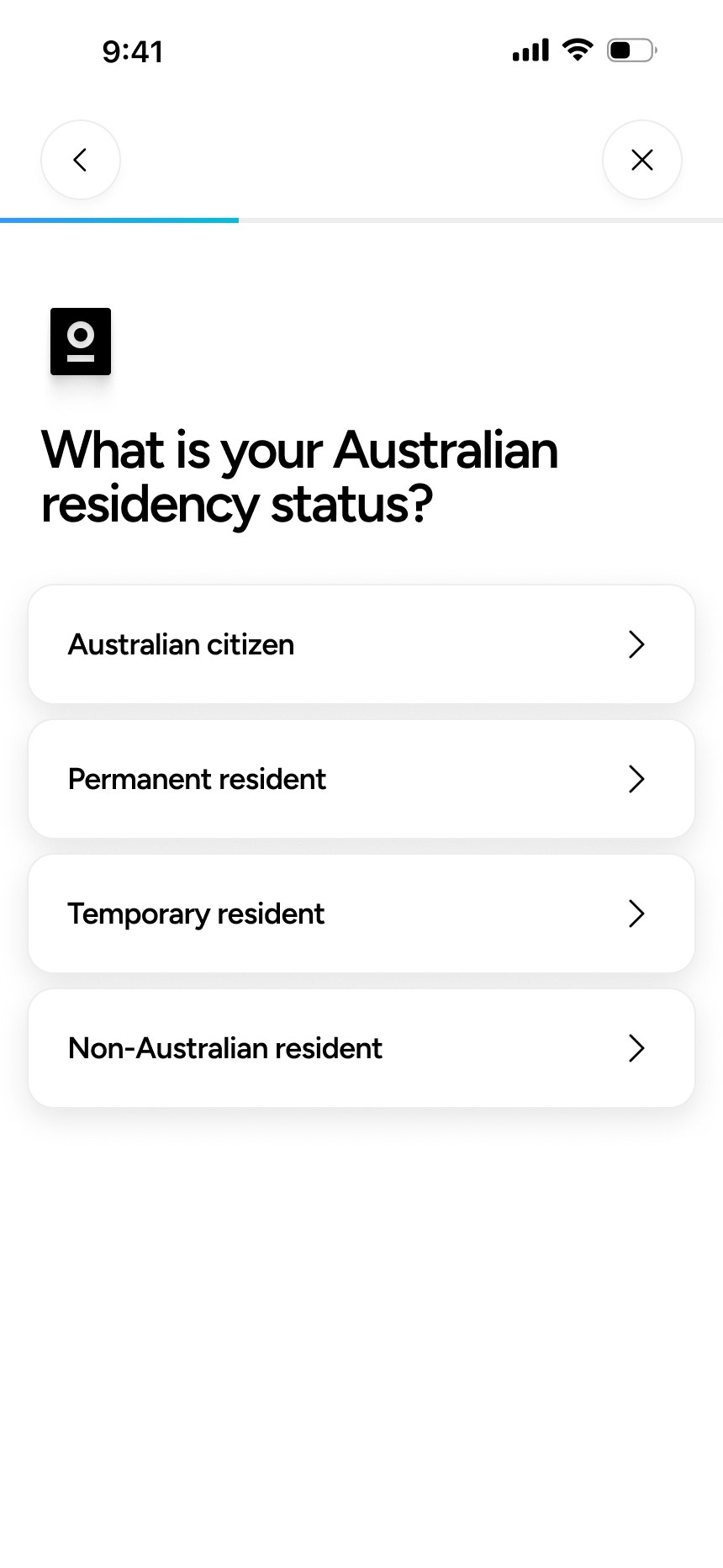
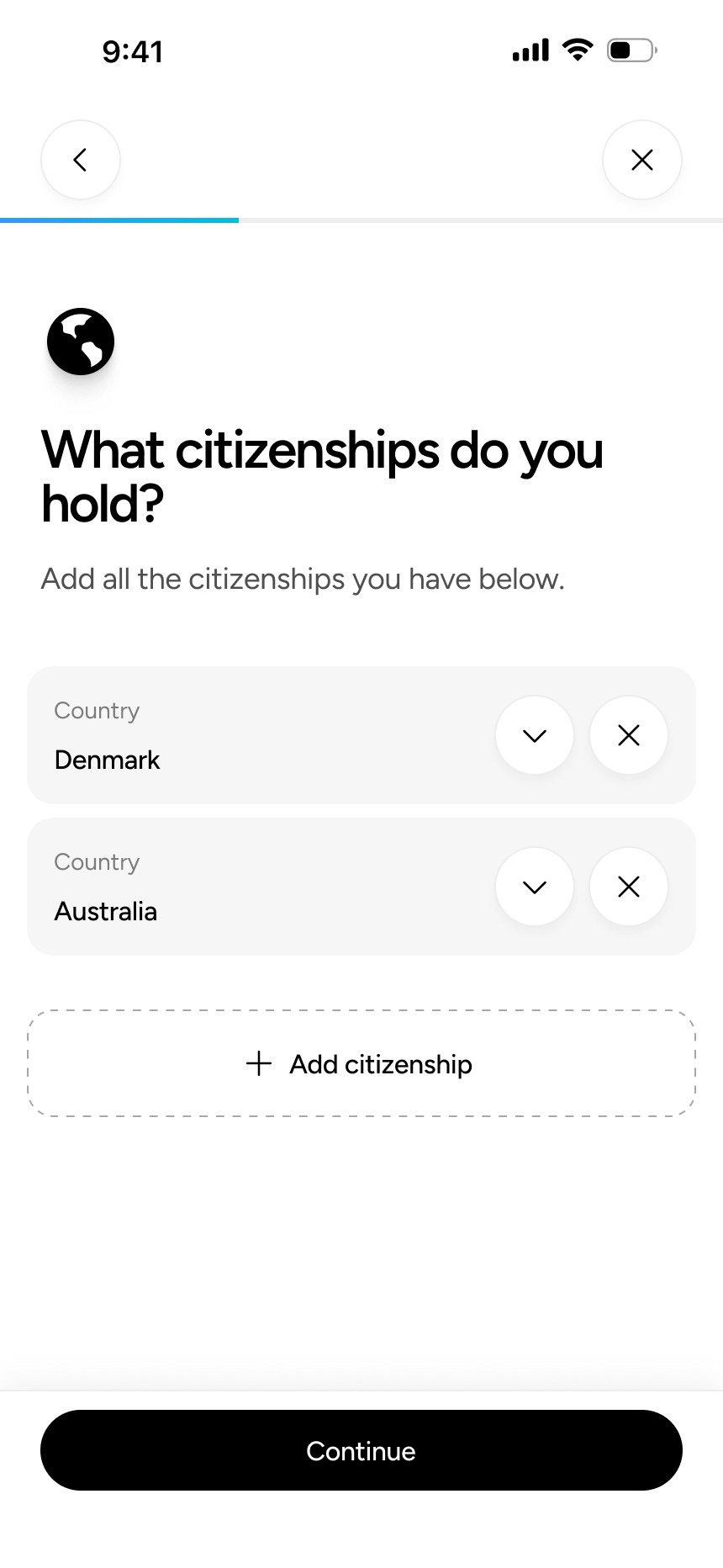
Residency status sets the path for the citizenship questions that follow, so nobody answers a question that doesn’t apply to them. Citizenships, foreign tax residencies and other names all use the same add-a-row pattern, so people learn it once.
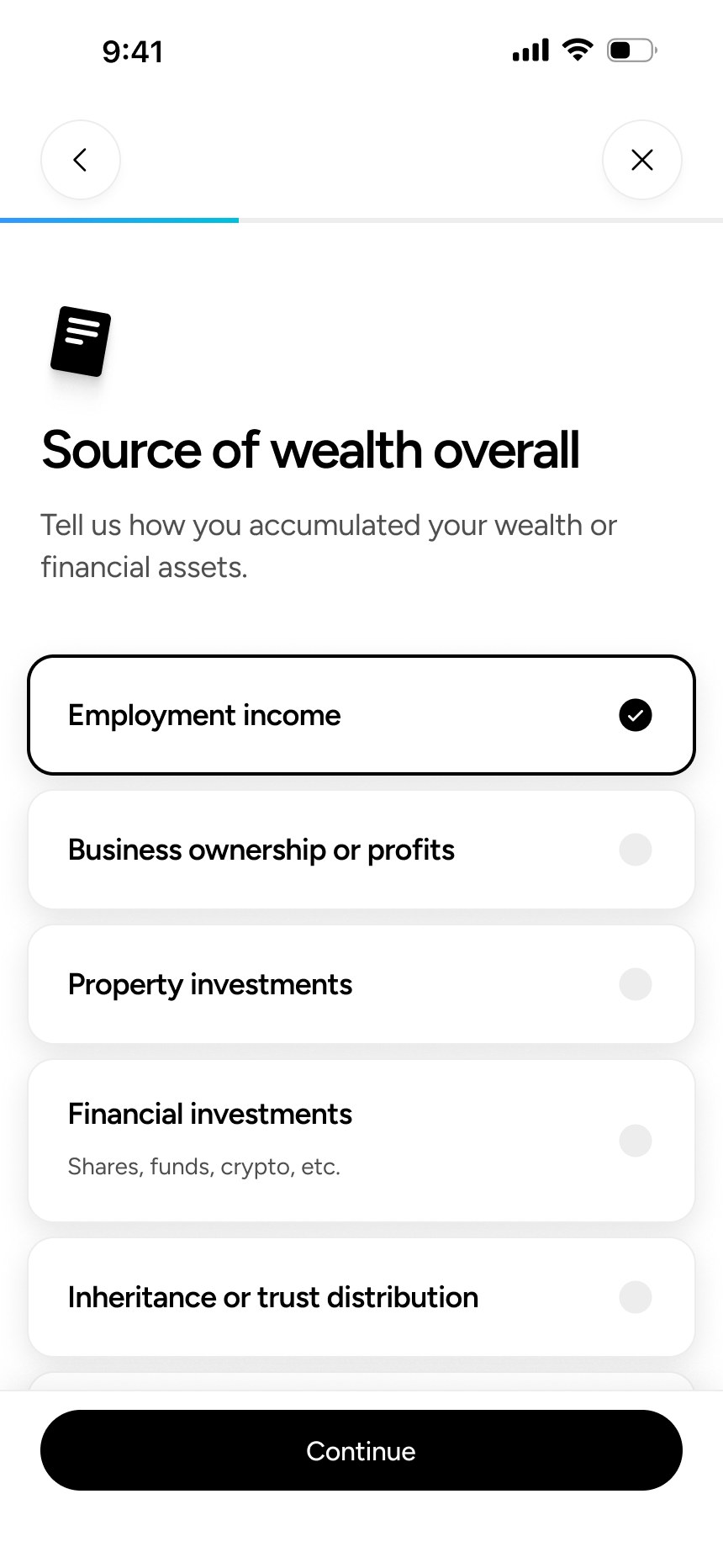
Source of funds and source of wealth sit on separate screens. One asks about this payment; the other asks how someone built what they have. On one screen they’re easy to confuse. Options carry short sub-labels, such as “Shares, funds, crypto, etc.”, to settle which one fits.
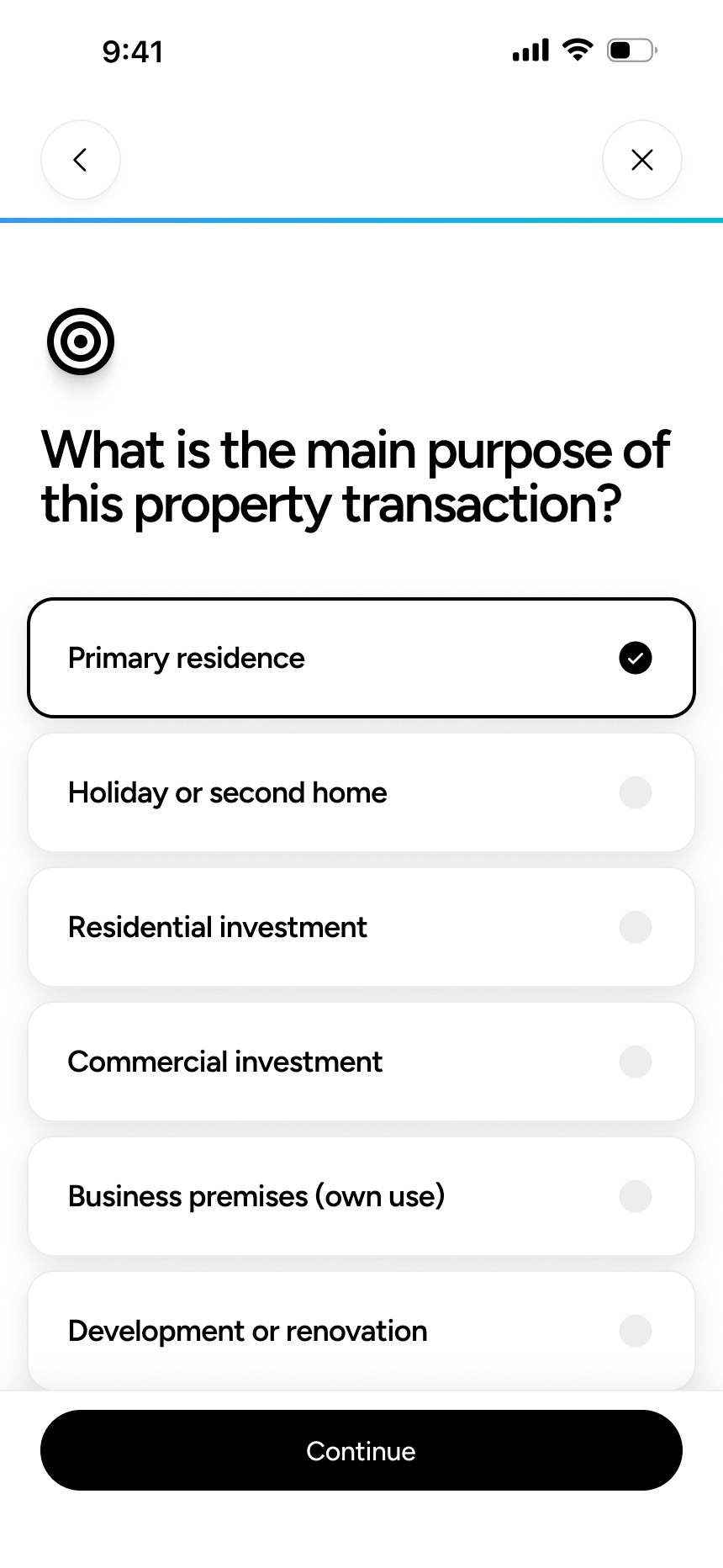
Purpose options use words people already use about property: primary residence, holiday home, investment, development or renovation. Gender is asked because AML reporting needs it, with “Prefer not to say” available.
Failure states
Designing failure screens, then removing them
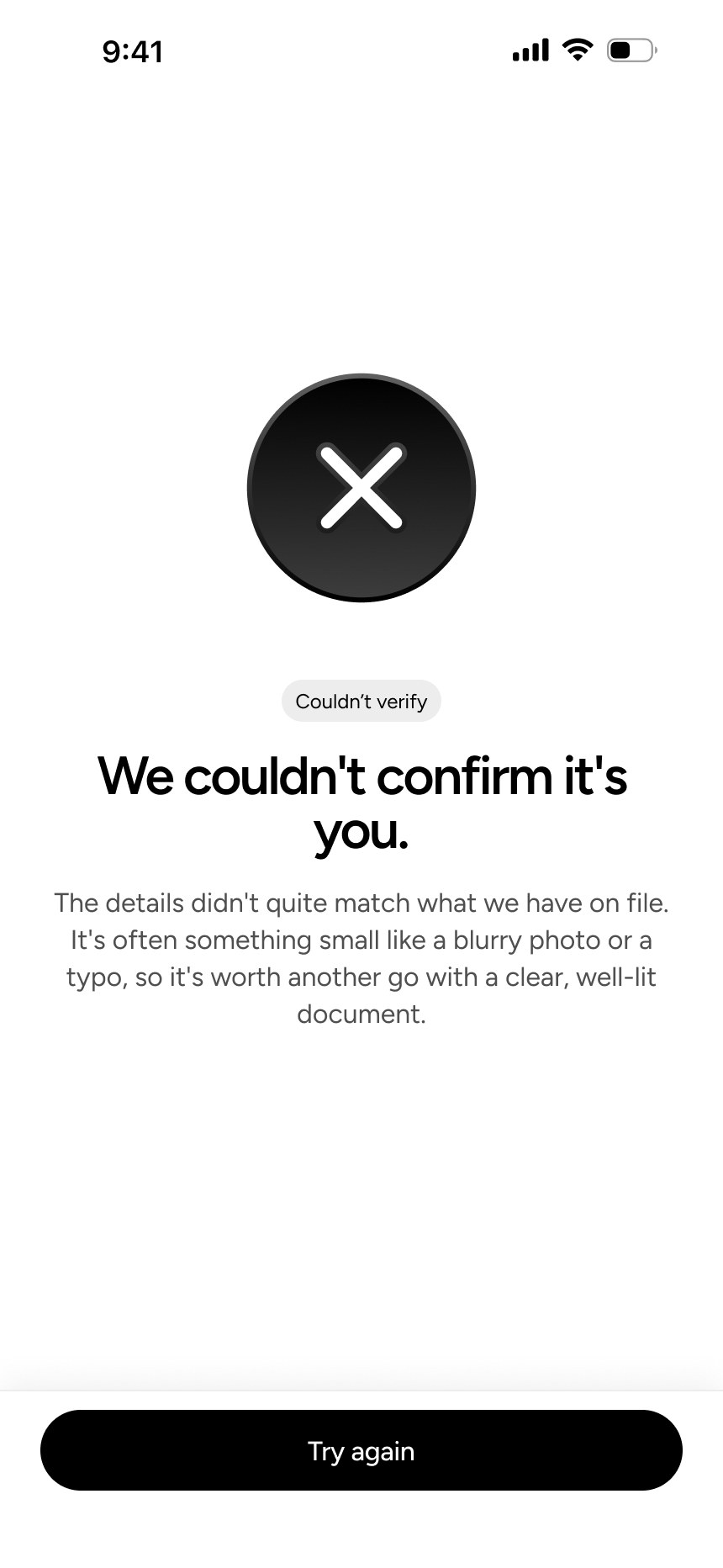
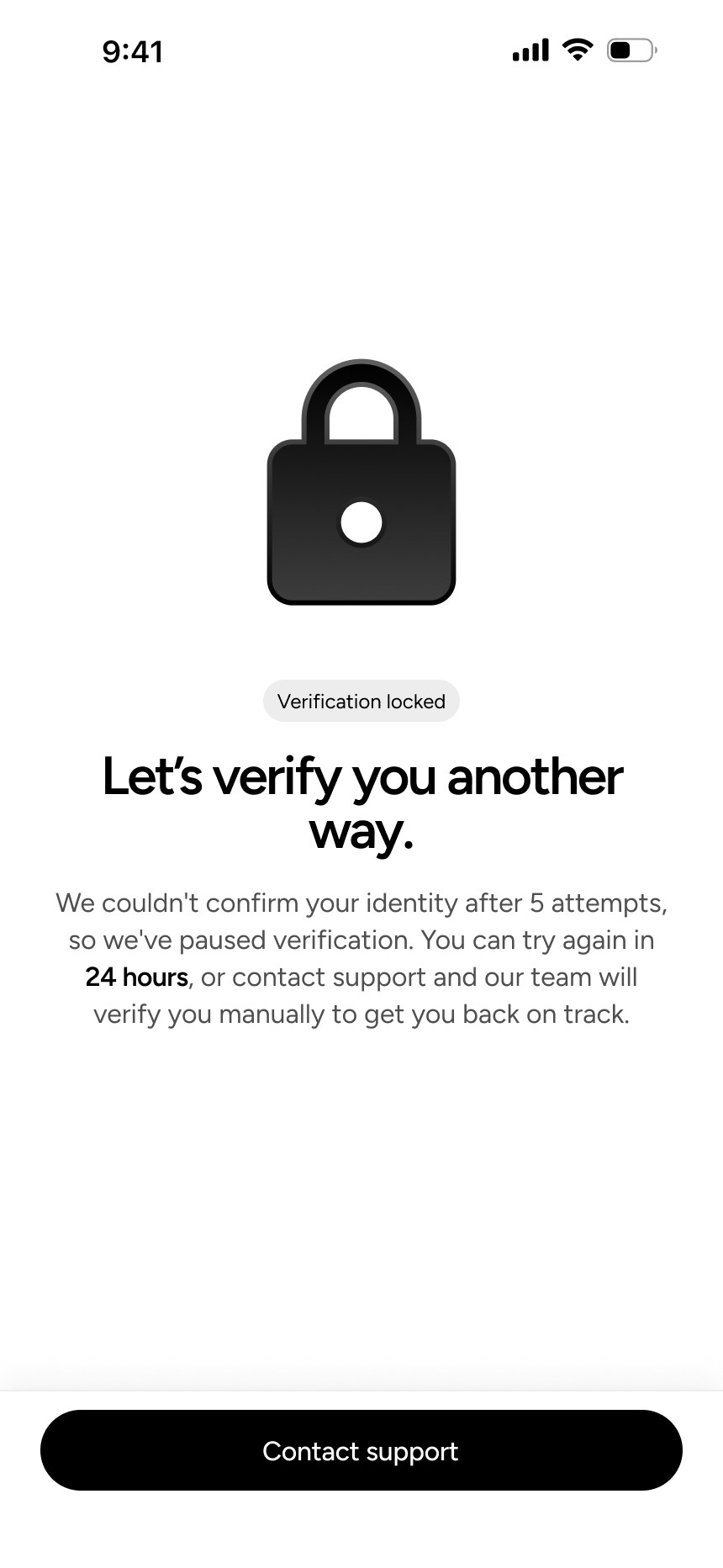
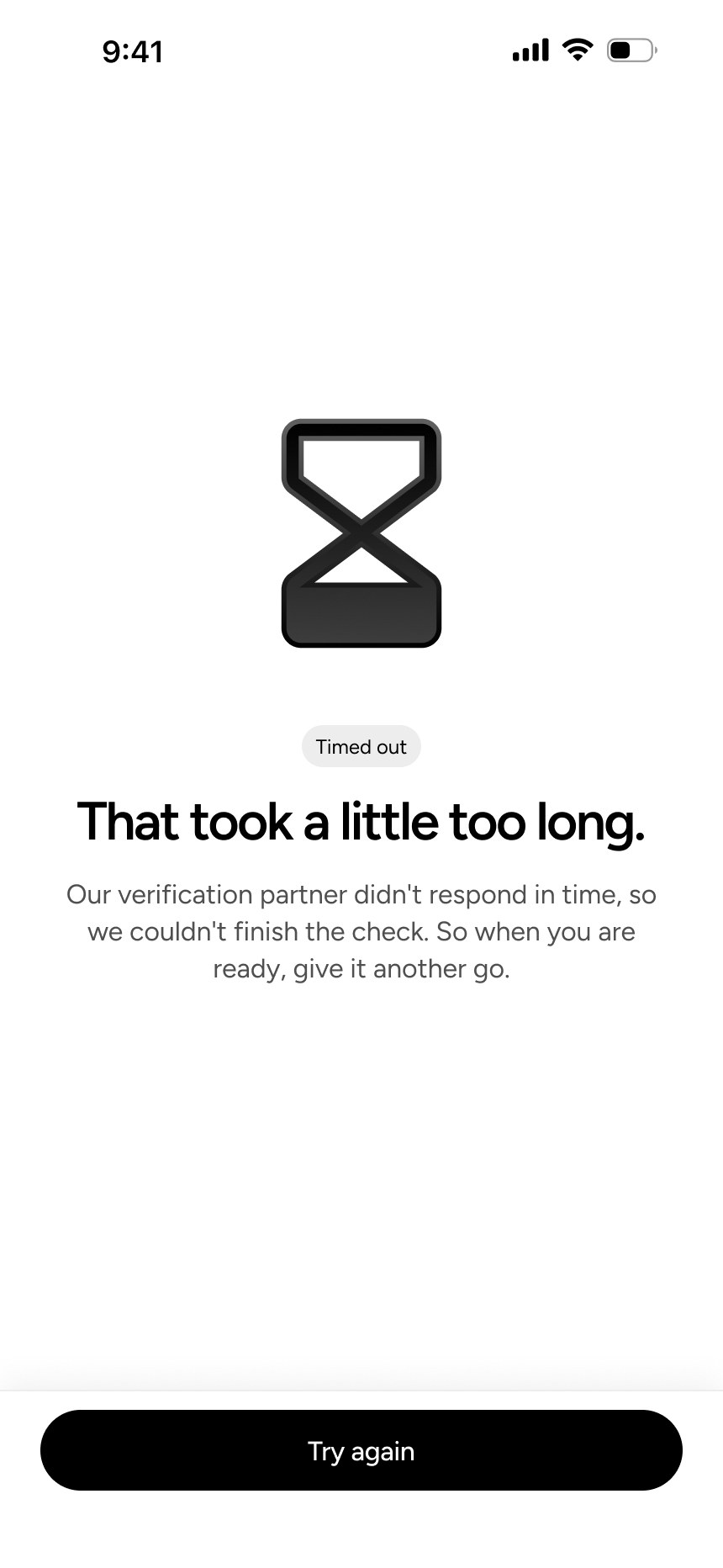
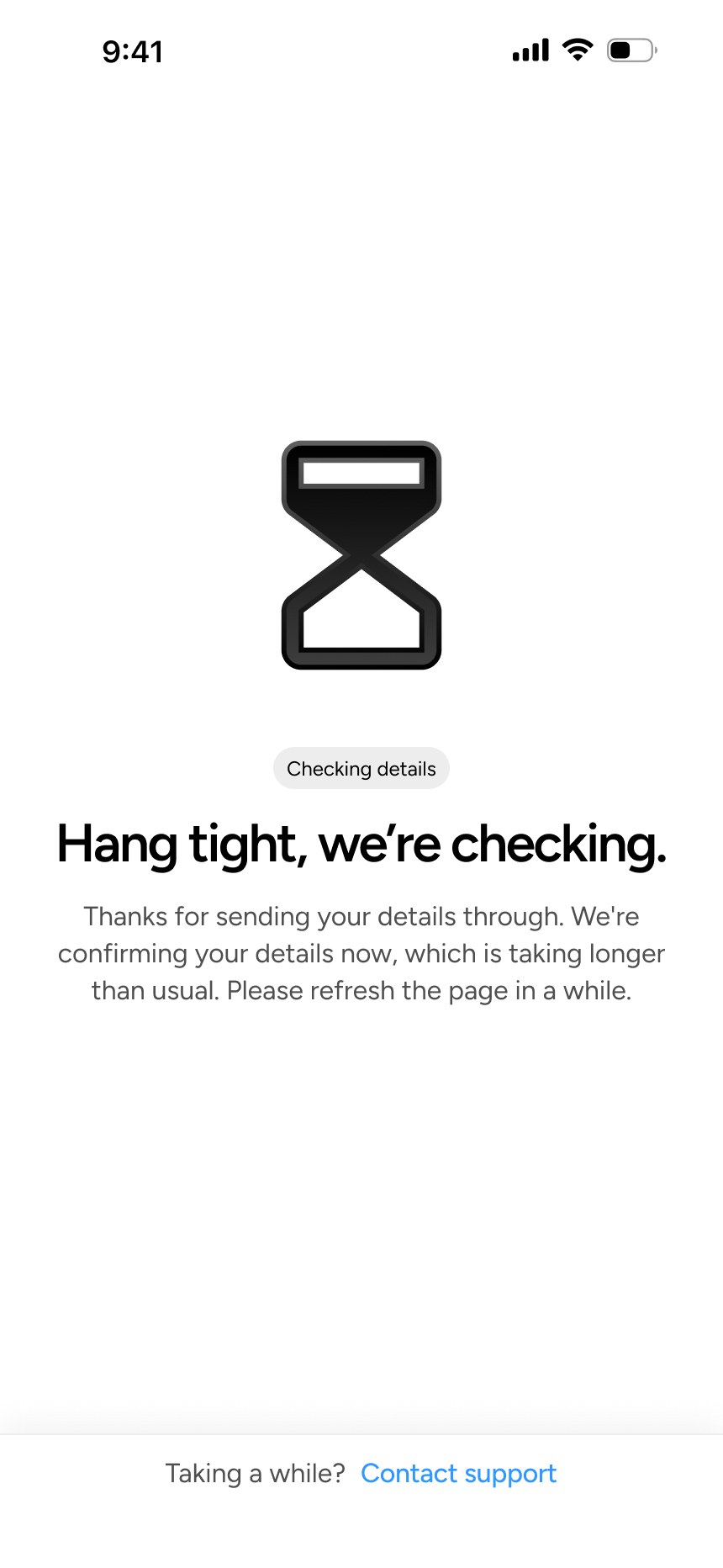
For the web flow I designed the full set of failure states: couldn’t verify, locked after five attempts, timed out and still checking. Each had its own explanation and next step.
Then we removed all four. Telling someone exactly why they failed an identity check gives a fraudster a feedback loop and risks tipping them off. DAON already handles retries inside its own flow, and anything that still doesn’t pass goes to Ammoze’s compliance team for manual review.
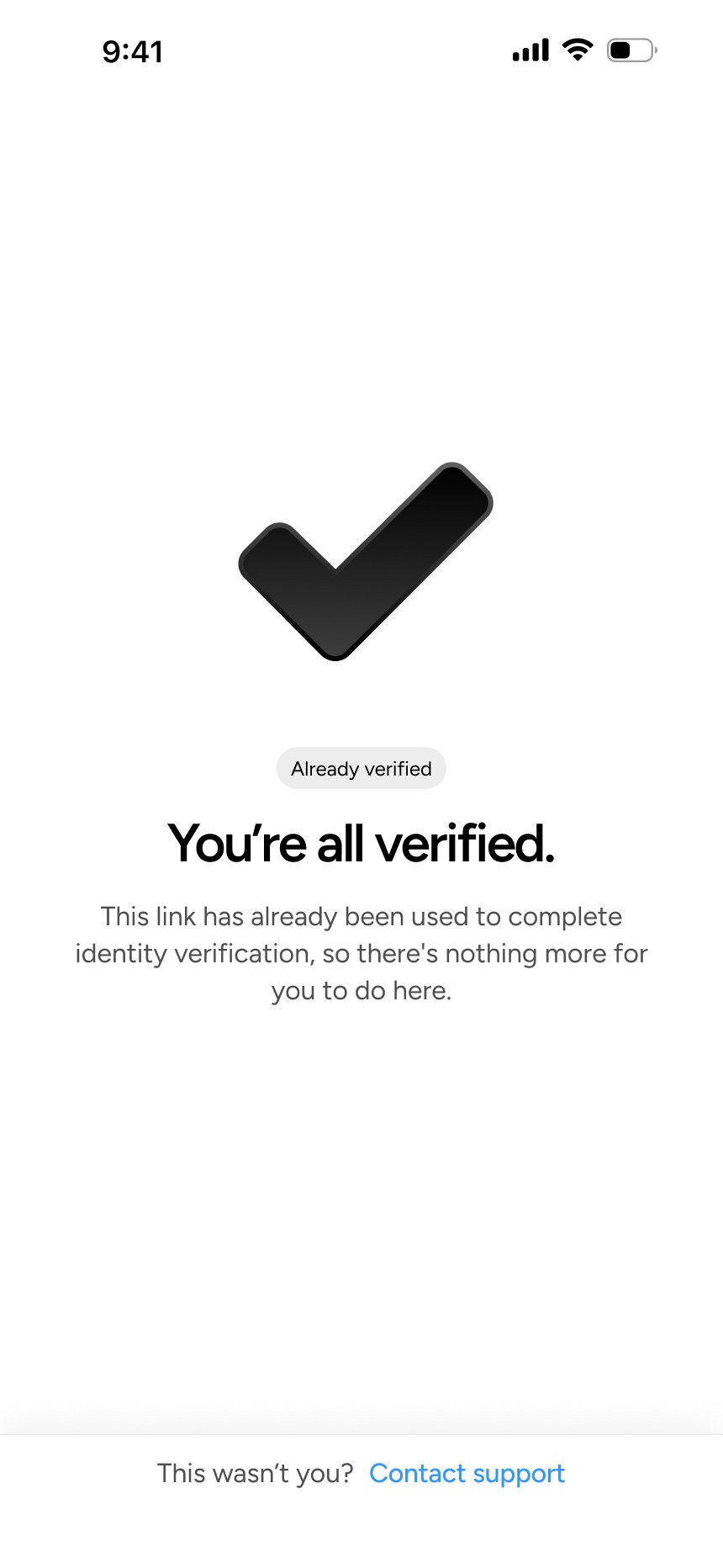
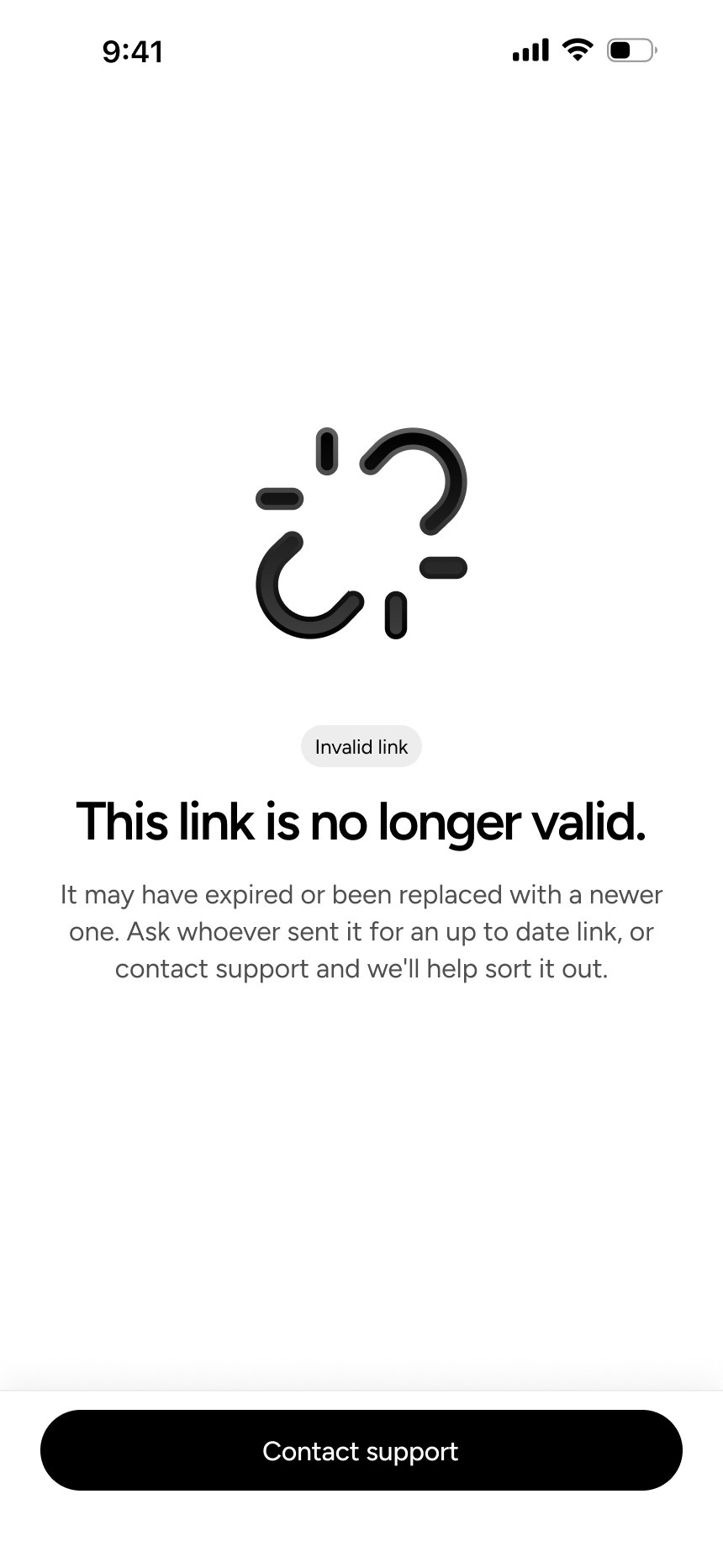
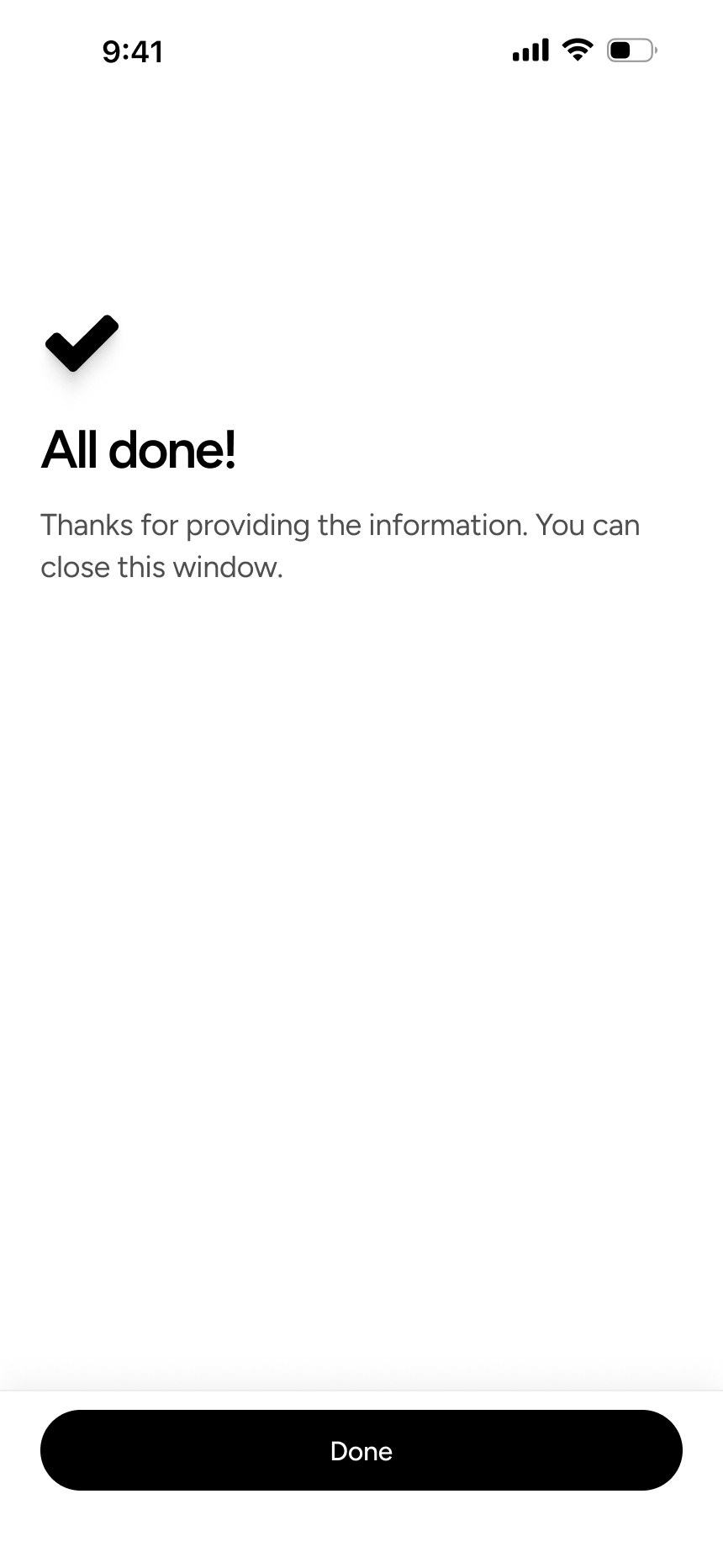
So the person being checked always finishes on the same screen: “All done!” The only error states left are about the link rather than the person: it has already been used, or it’s no longer valid.
Agents see the full picture. The person being checked doesn’t.
Removed
Kept
Deposit and payout
Hold the payout, not the deposit
A check that’s still in progress doesn’t stop a buyer paying. The deposit is what secures the property, and it sits in Ammoze’s trust account, so holding it carries little risk. The risk is in releasing money, so that’s where the gate sits.
One calm line instead of a verdict
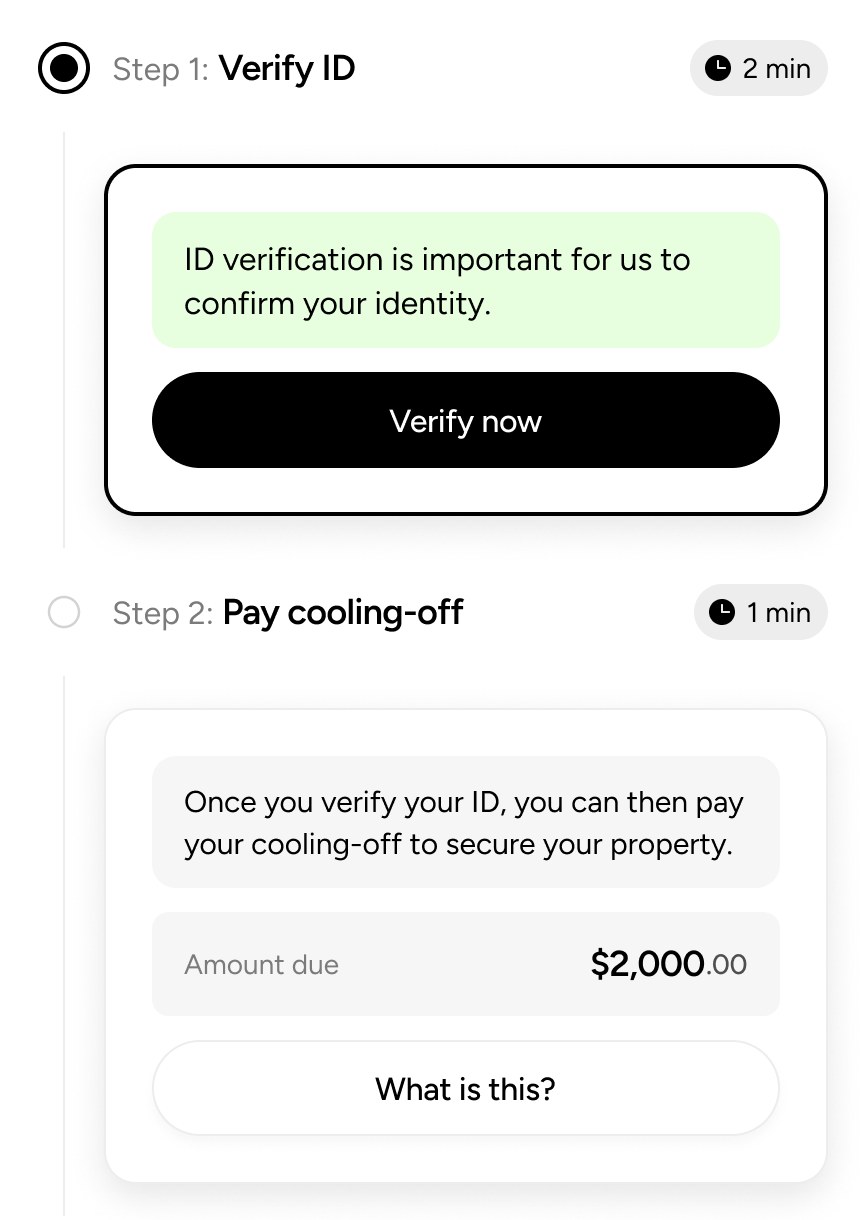
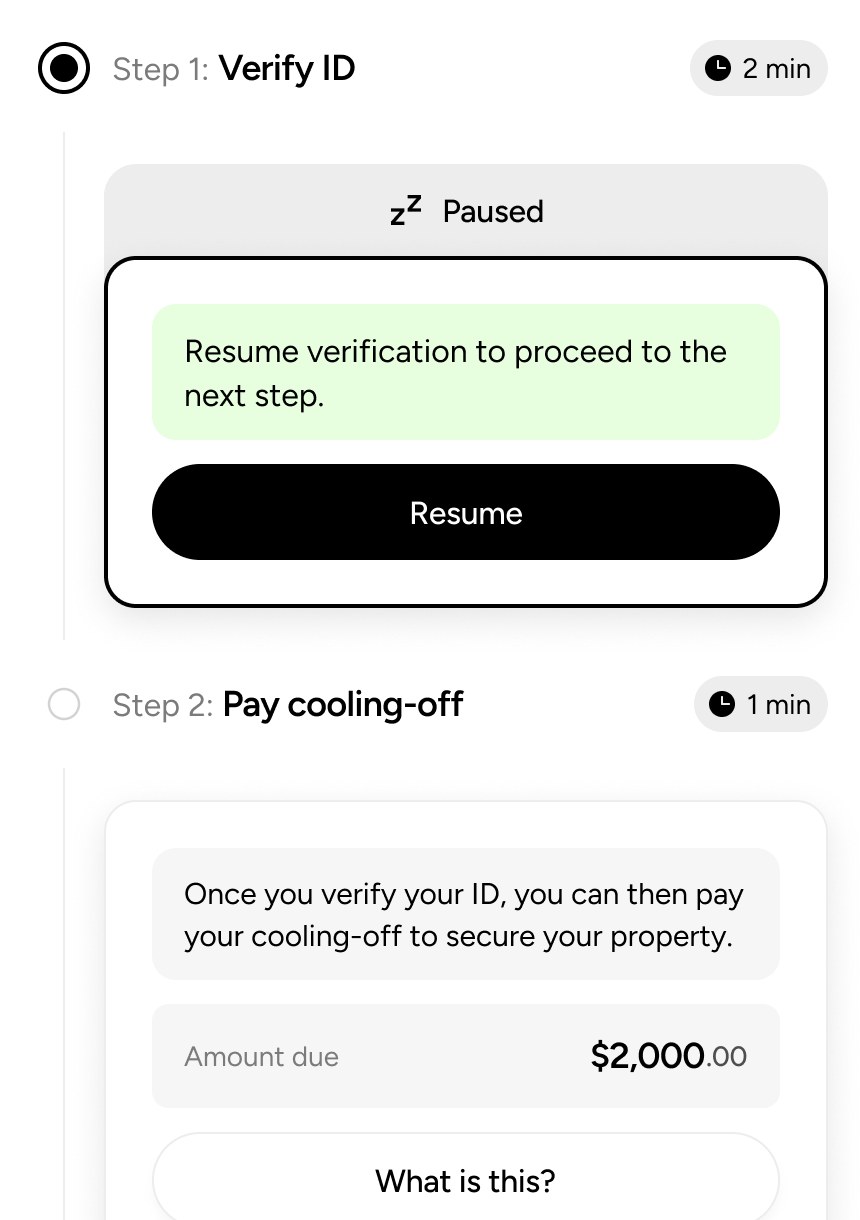
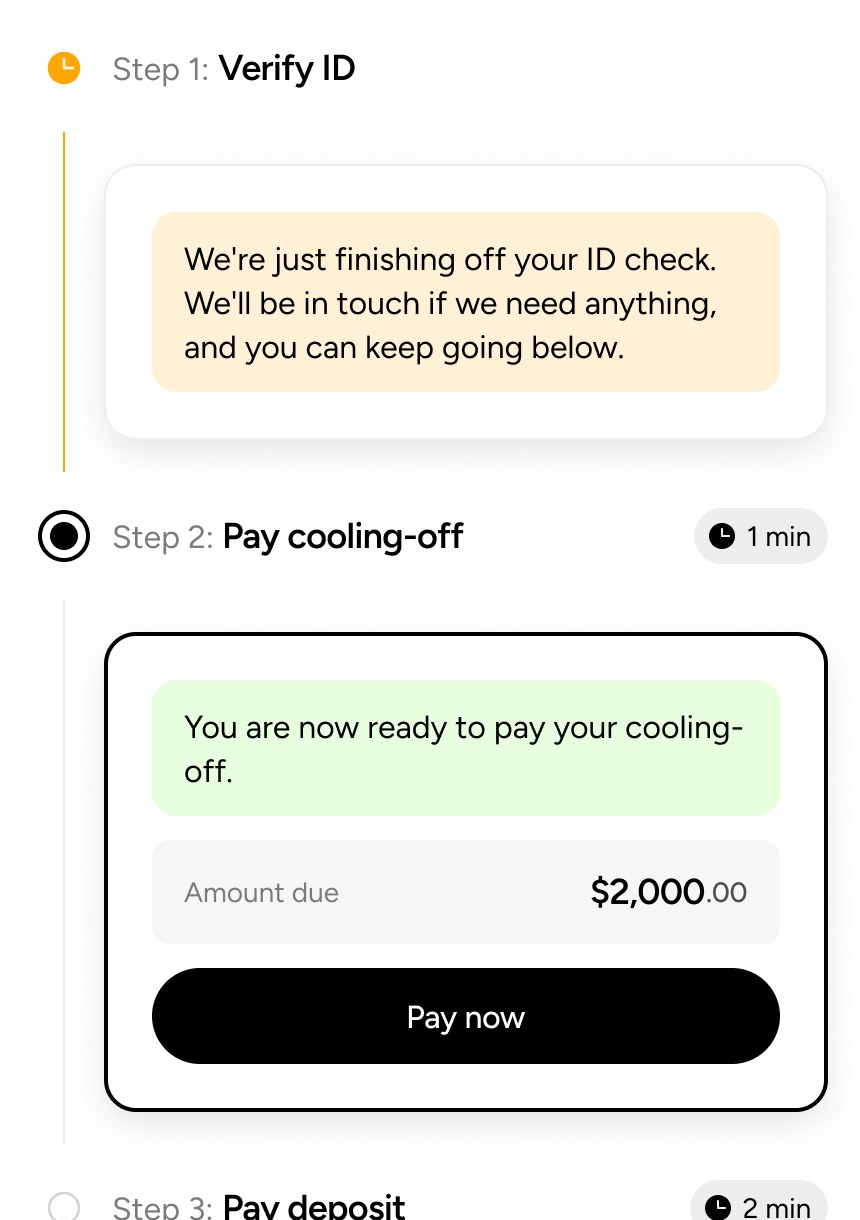
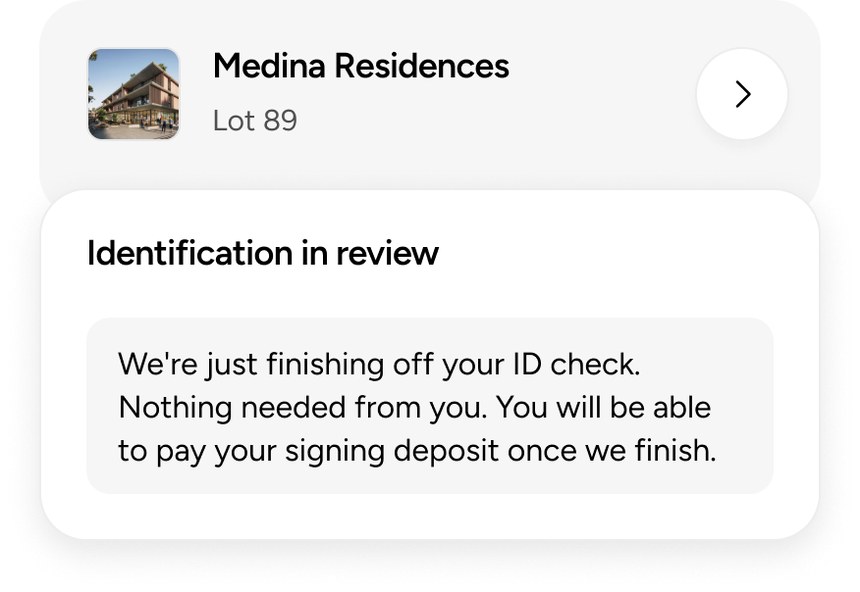
On the buyer’s property page, verifying their ID is the first step. If they paused, they can resume where they left off. If the check is still running, they see one line: “We’re just finishing off your ID check. We’ll be in touch if we need anything, and you can keep going below.” The next payment step unlocks as normal.
The money still has to come from the right person
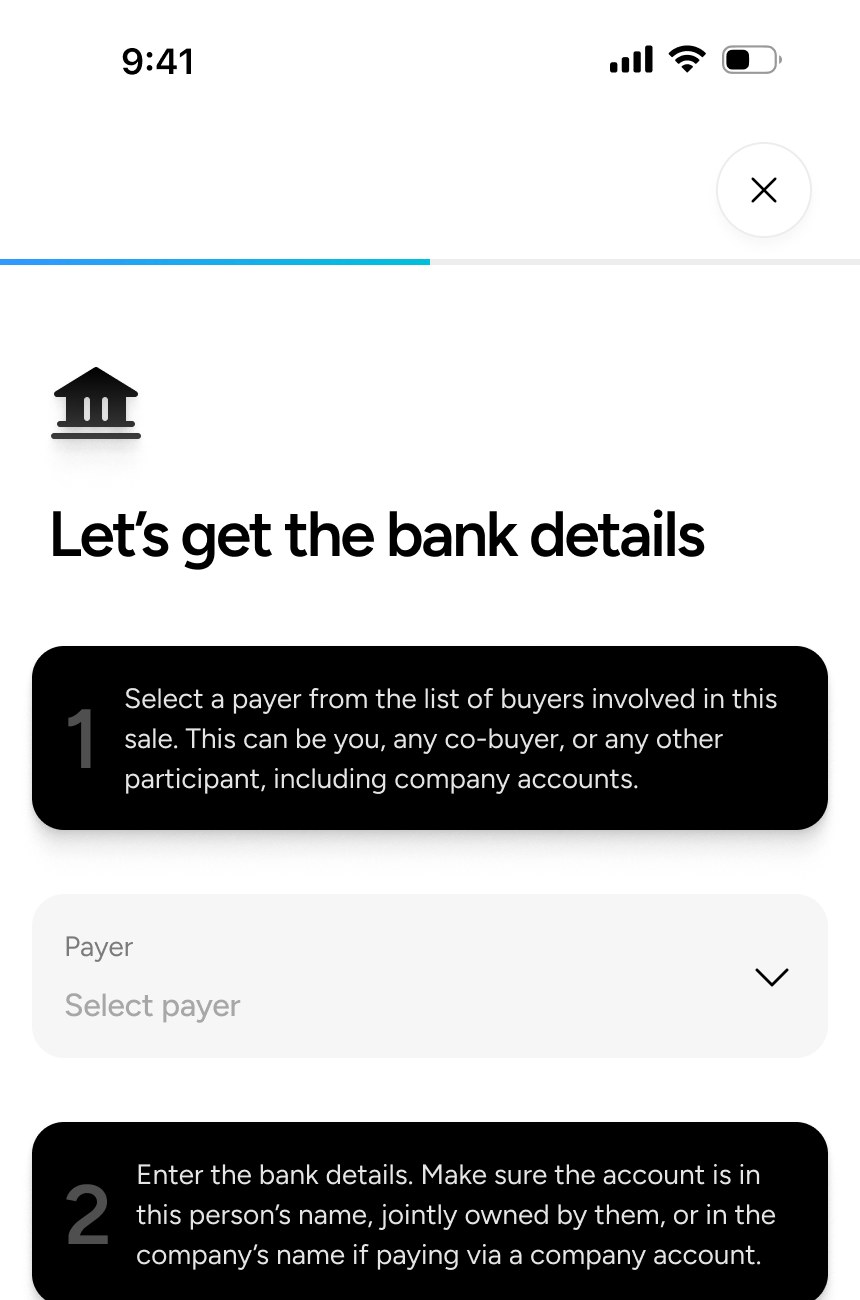
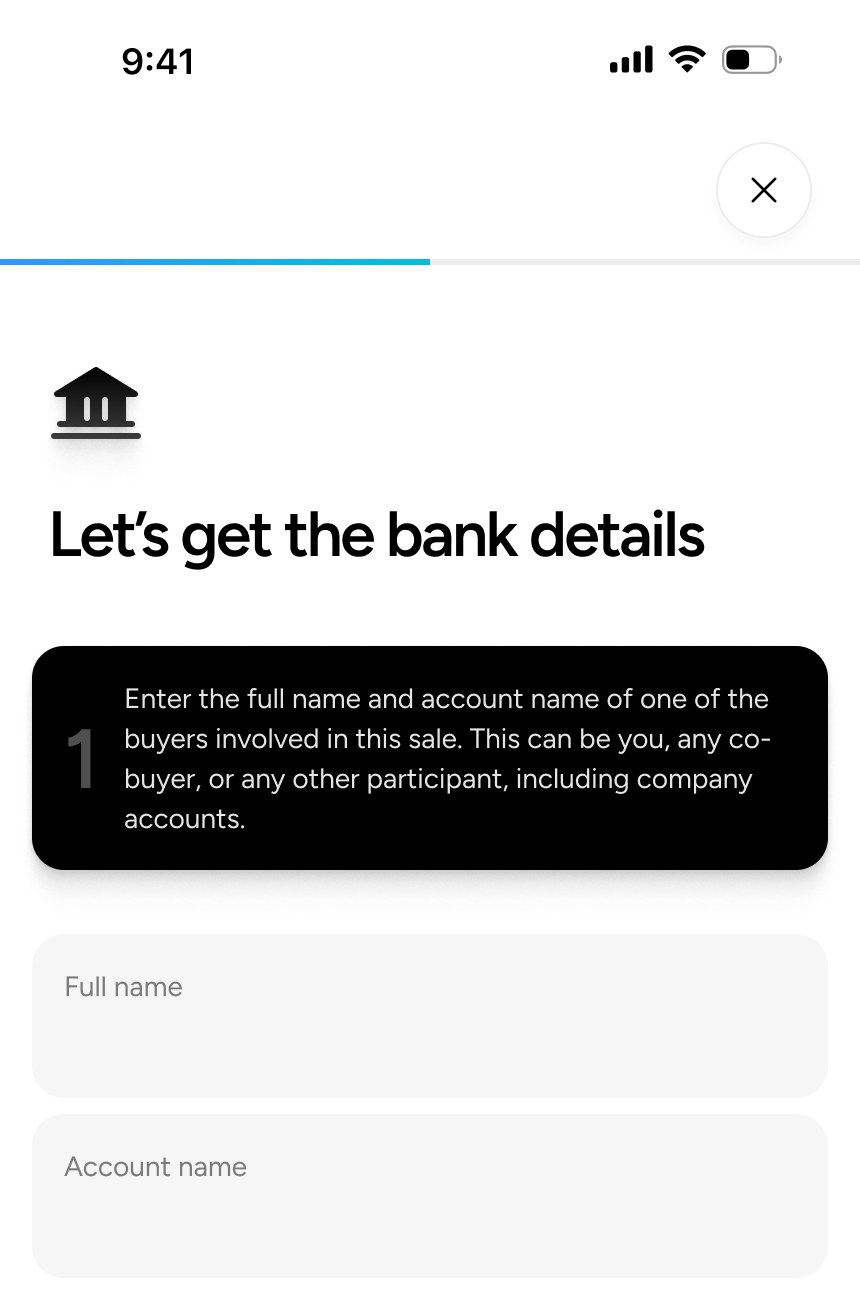
Payment has to come from someone in the sale, from an account in their name, held jointly or in their company’s name. When the check has passed, the buyer picks the payer from the verified people in the sale. When it hasn’t, they enter the payer’s full name and account name instead.
Off the plan, the smaller holding deposit can go through while the check finishes. The signing deposit waits until it clears.
Agent experience
Agents start the checks. Ammoze runs them.
No legal names typed by hand
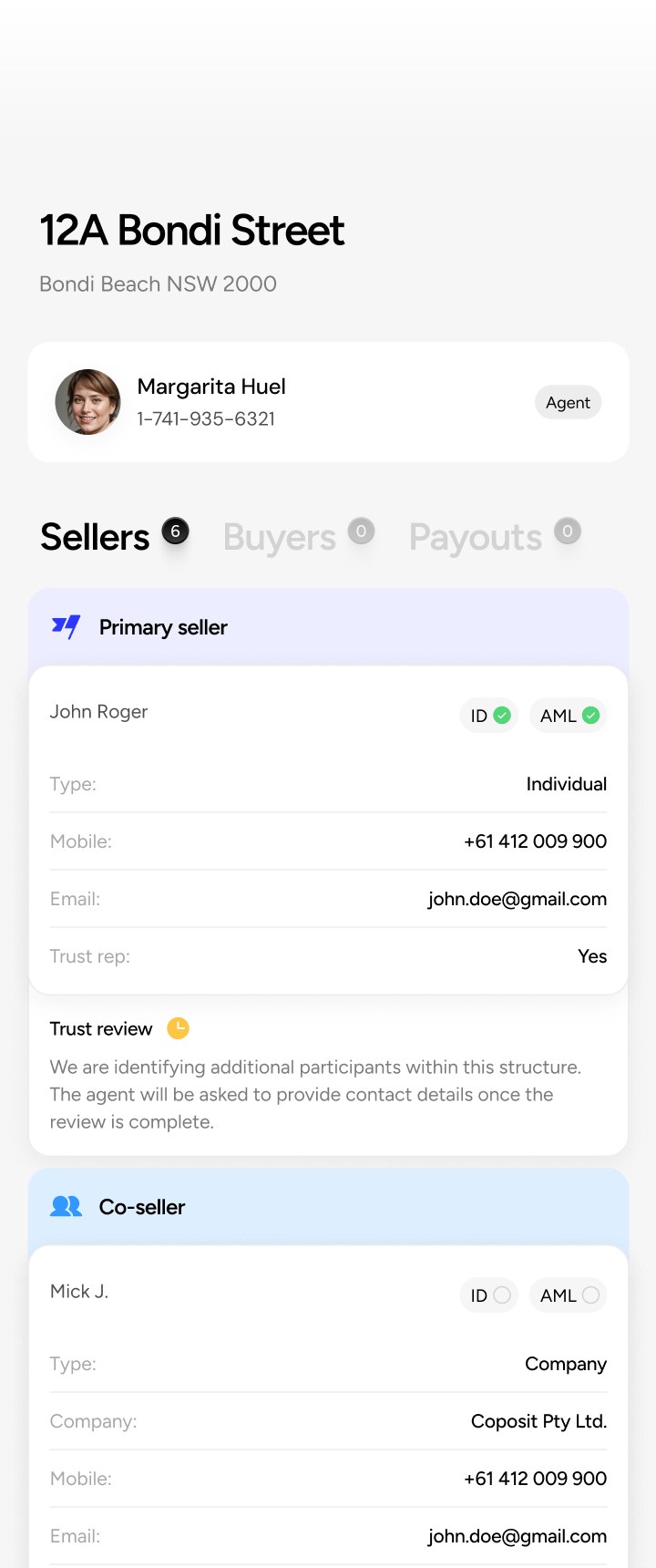
An agent adds each seller or buyer with a mobile number and a reference name they’ll recognise, like “John D.” When that person completes AML, their verified legal name replaces the reference name. Agents never type legal names, so there’s nothing to get wrong.
Let the company search do the work
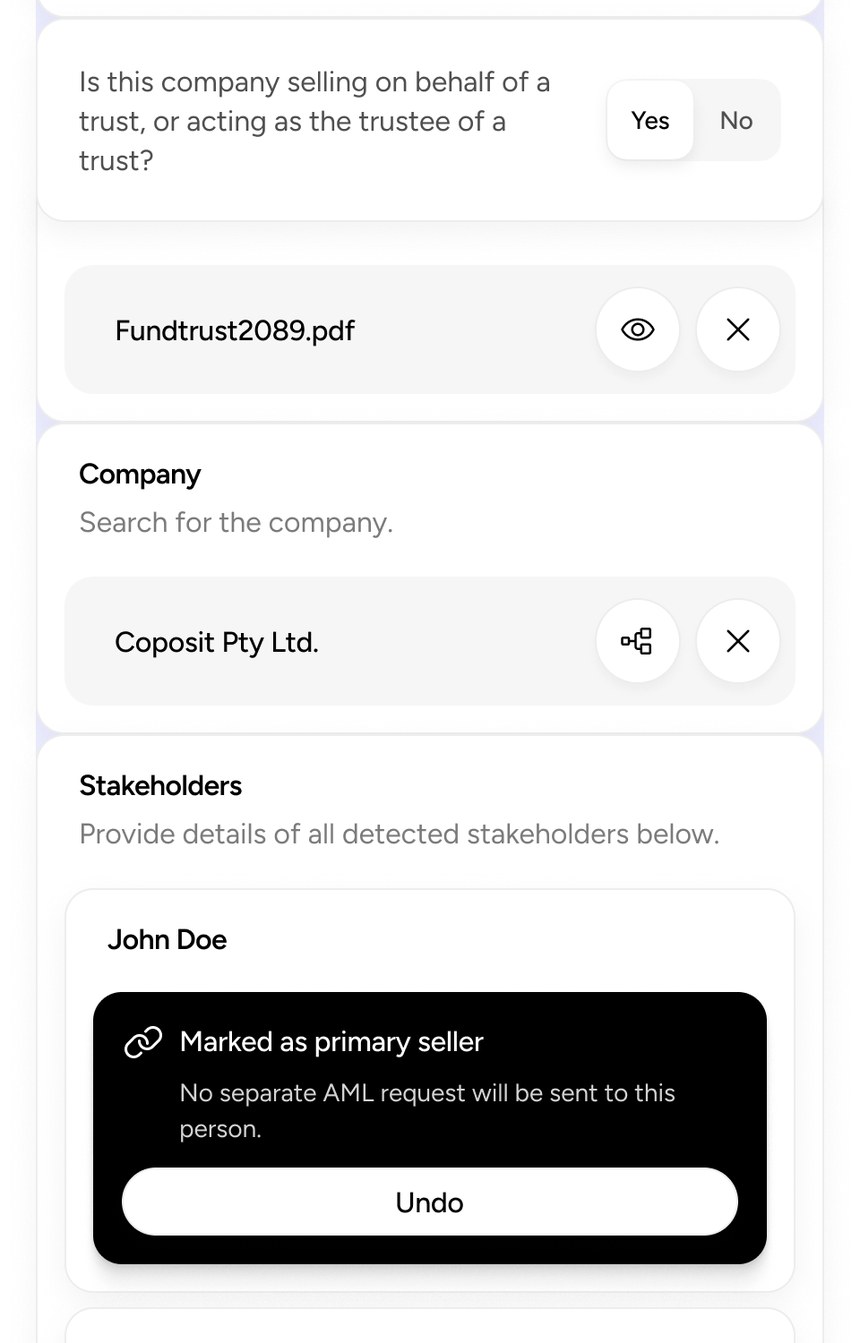
For a company, the agent searches for it and its stakeholders are detected automatically; the agent only adds contact details. If the seller is also one of those stakeholders, marking them as primary seller means no second AML request goes to the same person.
Trusts need the trust deed. Where a trust or foreign entity sits inside the structure, Ammoze runs a trust review to identify the additional participants, then asks the agent for their contact details.
Status an agent can act on
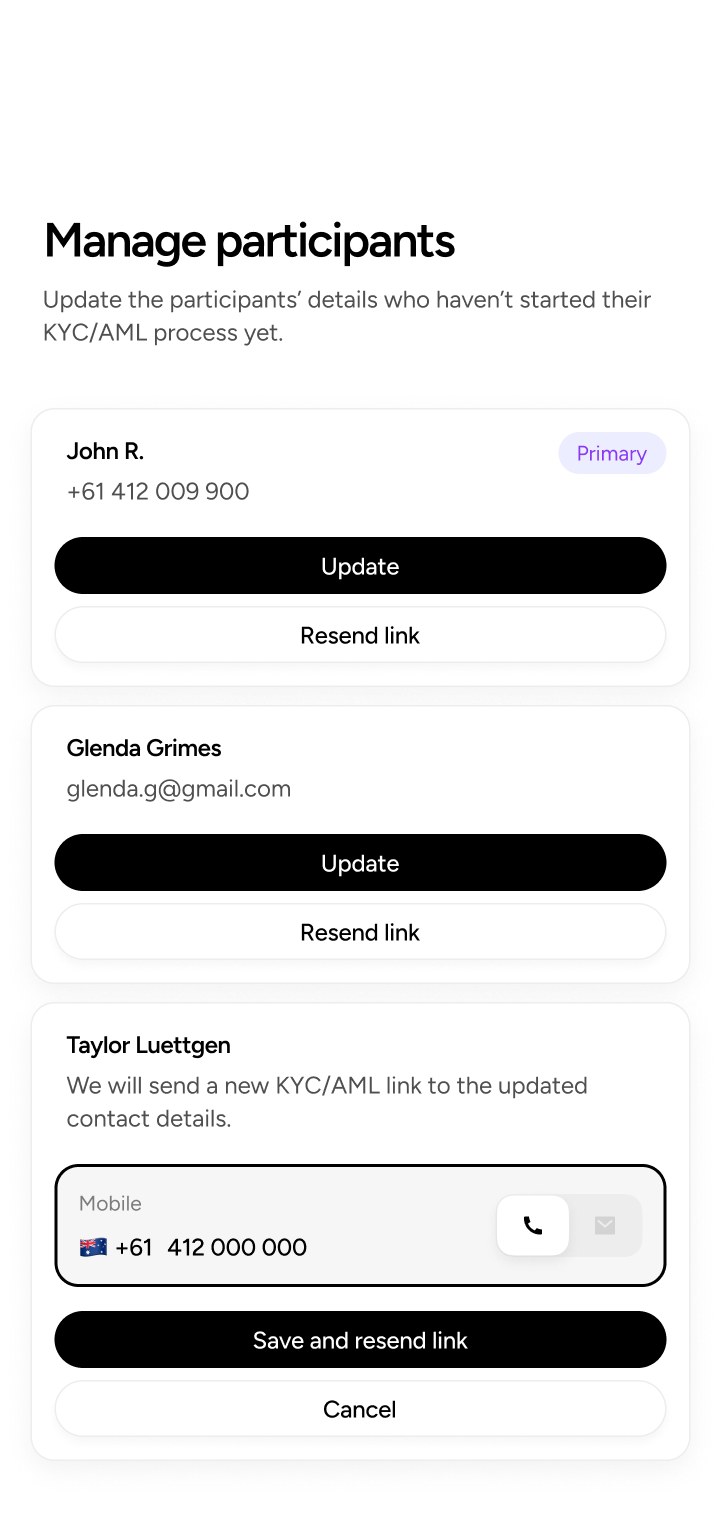
Each person shows ID and AML as separate statuses, so it’s clear which part is outstanding. The agency can download the AML report for its records. Contact details can only be changed for people who haven’t started their check.
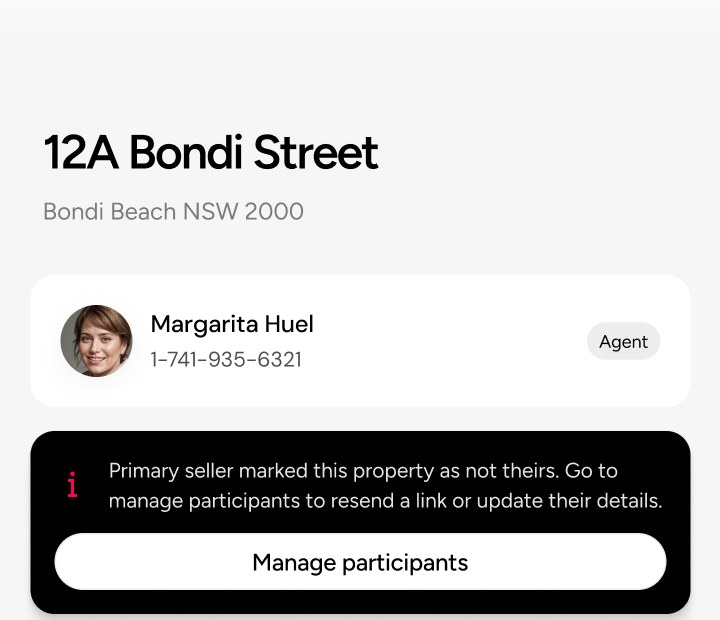
Sellers can also push back. If a seller marks a property as not theirs, the agent is told straight away and can update the details or resend the link.
Every open check is held at payout
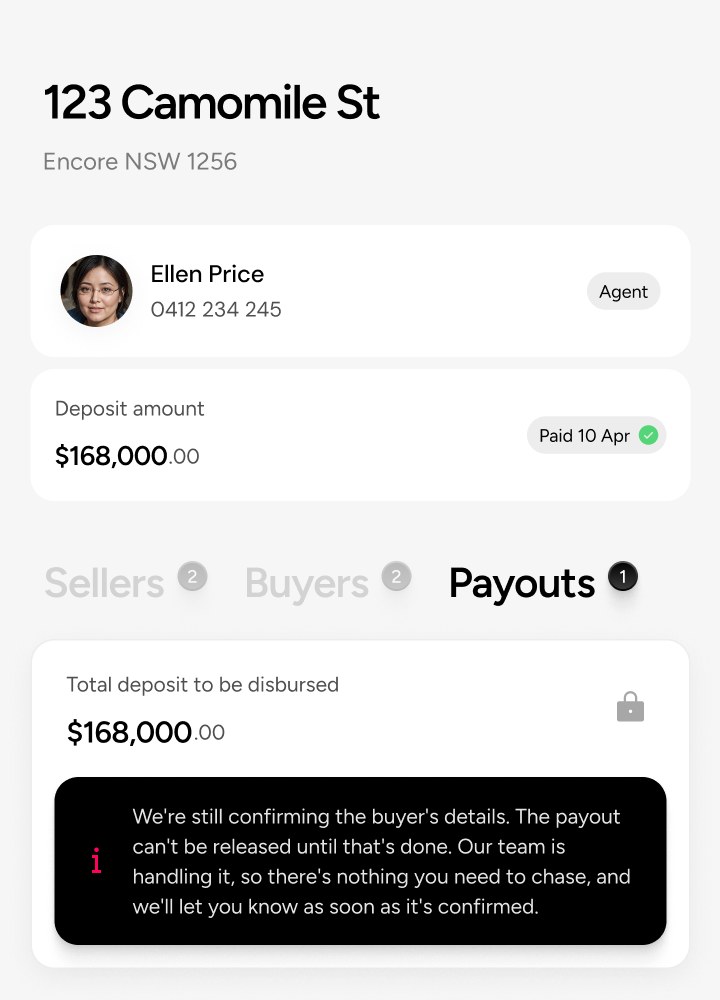
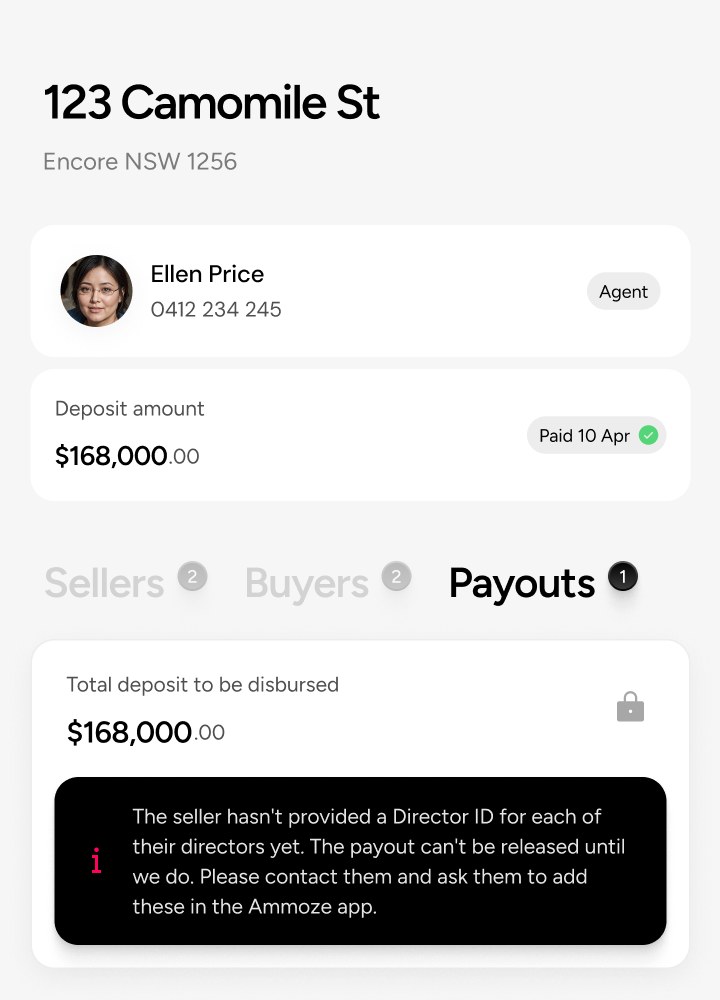
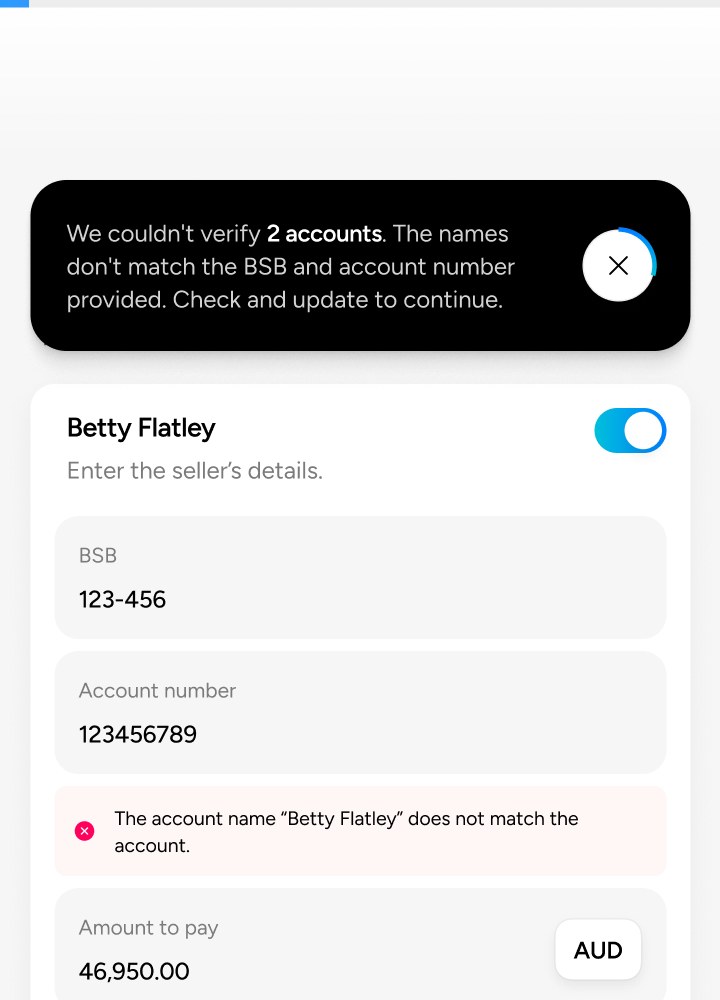
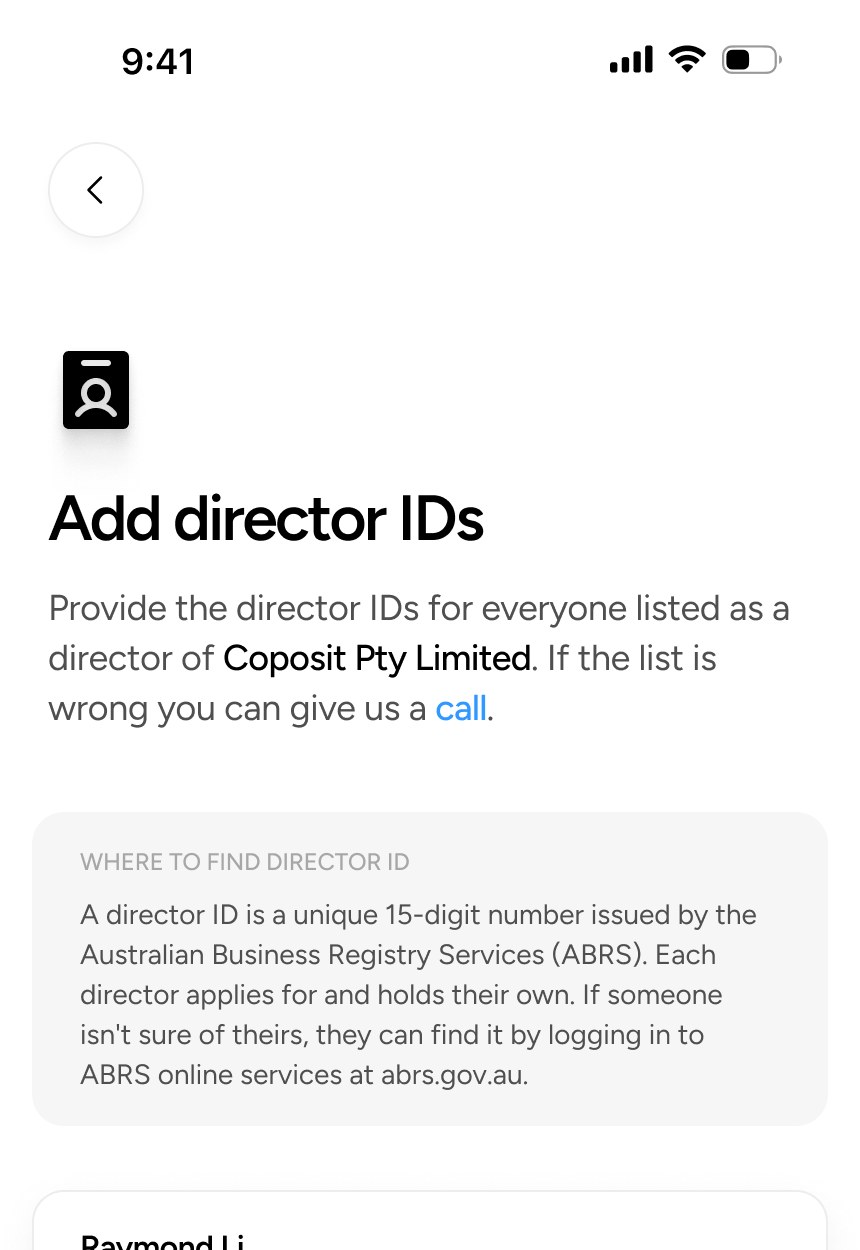
Payout is the moment money leaves the trust account, so every outstanding check is enforced there. Each block says what’s missing and who needs to act.
| What’s outstanding | Who acts | What the agent sees |
|---|---|---|
| A buyer still being confirmed | Ammoze compliance | “Our team is handling it, so there’s nothing you need to chase.” |
| Director IDs for a company seller | The seller, in the Ammoze app | A prompt to ask the seller to add them |
| A payout account that doesn’t match | The agent | Which account names don’t match the BSB and account number |
Outcomes
What the work has delivered
The verification flow has been live since the beginning of July 2026. 98% of people have completed verification, with no difficulty reported.
We haven’t seen drop-offs, but I don’t credit that to the design alone. Buyers are highly motivated: they’re securing a property.
Four to five agencies have been onboarded so far, with no issues reported.
Reflection
What I learned
Decide what not to show
On Unrent, each ending earned its own explanation. Here, the responsible answer was the opposite: one calm ending for everyone, with the detail going to the people who can act on it.
Put the gate where the risk is
Blocking the deposit would have felt safe and slowed every sale. Holding the payout protects the same money without making buyers wait.
Order a flow by what you control
Putting the third-party scan last means a failure there never costs someone the answers they’ve already given.
Let the system carry the data entry
Reference names, company search and detected stakeholders keep agents away from compliance data, which keeps that data accurate.
Explore the product